
Executive Summary
Insurance is one of the last major industries to undergo the automation of its mechanical layer. The bottleneck has never been talent. It has always been architecture: a relay race of handoffs and lost context that turns months of waiting into the product development norm.
This whitepaper argues that the next winners in insurance are not just those who move quickly, but those who learn quickly, because they can run the product cycle more times, faster than ever before.
The Agentic Insurance Product Factory replaces the blank page with a full first draft of real artifacts in days. Experts stop spending time on paperwork and start spending it on judgment. Iteration becomes cheap enough to be continuous, and continuous iteration becomes a structural competitive advantage.
The Anatomy of Slowness
There is a particular kind of silence that settles over a conference room on day one of an insurance product development cycle. It is the silence of twelve intelligent people who know, with absolute certainty, that the product they are about to spend eight months building will be four months late, marginally different from three competitors, and obsolete in its assumptions before the first policy is sold.
They proceed anyway. Not because they lack imagination, but because the process demands it.
Insurance product development follows a remarkably consistent choreography across every line of business. A concept note is written. Committees review. Actuaries update legacy pricing models. Underwriters define rules. Legal drafts wordings. Technology translates all of it into systems. QA tests. Compliance reviews. Regulators approve. Training teams prepare materials for distributors who have already moved on to selling something else.
Each step is rational in isolation. In aggregate, they compose a Rube Goldberg machine of extraordinary cost and glacial velocity. The average insurance product takes 6 to 9 months from ideation to market. The average smartphone app takes 3 to 6 months. Both serve the same customer.
The bottleneck is not talent. Insurance companies employ some of the sharpest analytical minds in any industry. The bottleneck is architecture: a workflow archaeology problem composed of layers of process sediment deposited over decades, each reasonable in its time, collectively fossilised into something no one would design from scratch today.
Every Industry Gets Its Moment
Insurance is not the first industry to face this reckoning. It is, however, one of the last. The pattern is remarkably consistent across sectors.
Publishing had its moment when desktop publishing eliminated the typesetter. The craft did not die, it democratised. The people who thrived were not the fastest typists but the best editors.
Music had its moment when digital production tools turned bedrooms into studios. The A&R executive's job did not disappear; it became more important, because there was more to curate.
Architecture had its moment when CAD replaced hand-drafting. Freed from the mechanical work of drawing, architects could iterate on designs ten times faster. Buildings got more ambitious, not less.
Software engineering is having its moment right now. AI coding assistants eliminate the 75% of work that was never really engineering in the first place. The developers who adopt these tools do not become redundant. They become architects.
When a tool automates the mechanical layer of a craft, the practitioners do not disappear. They ascend. The typesetter becomes a designer. The drafter becomes an architect. The coder becomes a systems thinker. The question for insurance is: what does the actuary become?
The Agentic Insurance Product Factory
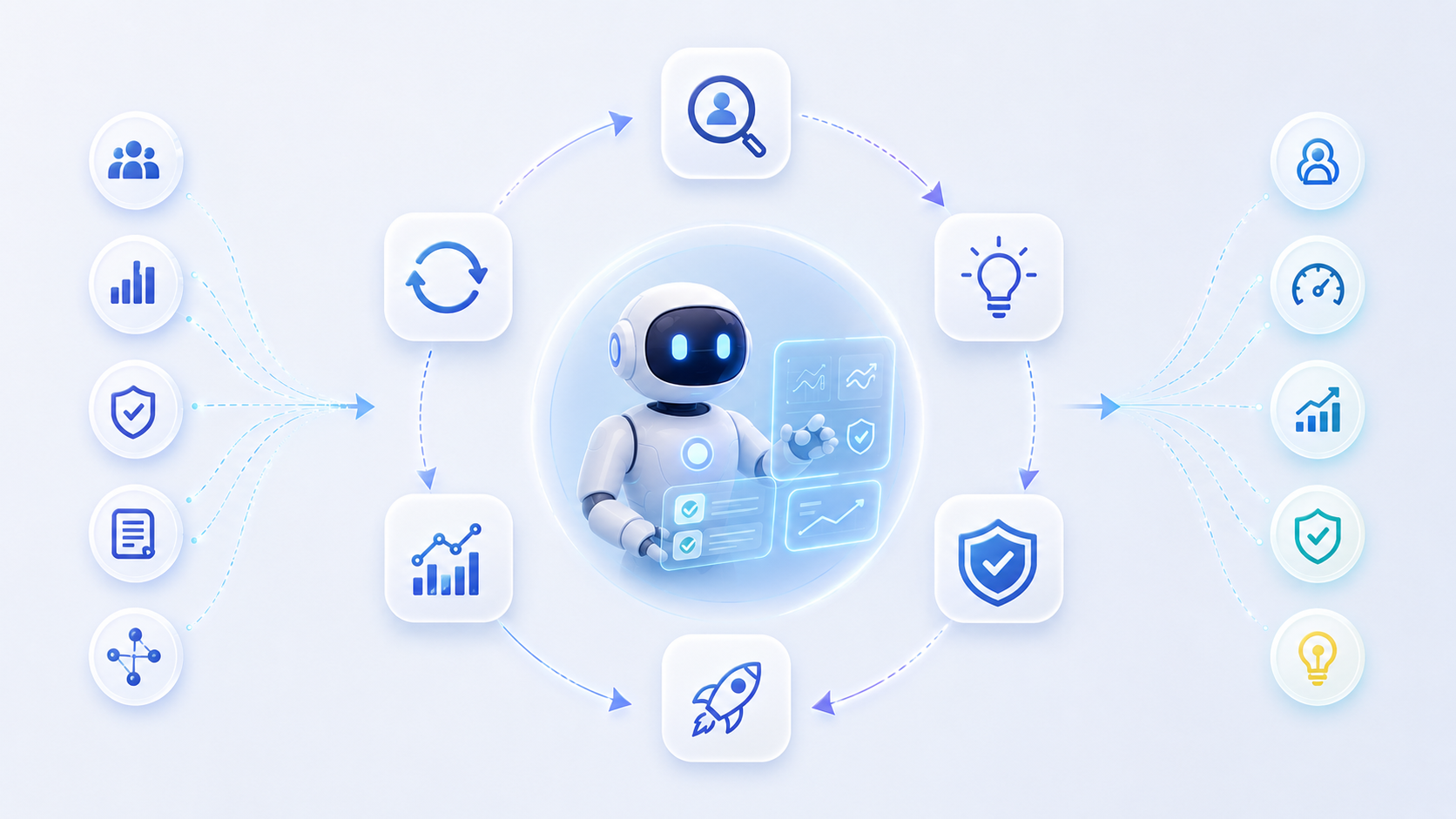
Now imagine a different version of that conference room. The business team has a market gap. Instead of kicking off a twelve-month waterfall, they describe the opportunity to an AI-powered product factory: a coordinated system of specialist AI agents, each one carrying deep domain knowledge of insurance product development.
Within days, the factory produces a complete first draft of the product: a market assessment grounded in real demographic and competitive data, a benefit schedule with plan tiers and exclusions, a pricing model with actuarial assumptions and sensitivity analysis, underwriting decision trees, technical specifications, test scenarios, and a launch playbook. Not a PowerPoint about what should be built. The actual artifacts.
The senior actuary opens the pricing model. It is not perfect; no first draft is. But the structure is sound, the assumptions are configurable, and the formulas are internally consistent. She spends one day refining what would have taken her team three weeks to build from scratch. The underwriting lead reviews the decision trees and adjusts thresholds based on the company's specific risk appetite, a morning's work instead of a month's.
The factory does not replace the twelve months of work. It replaces the twelve months of waiting, context-switching, and rebuilding that surrounds the actual expert judgment, which was only ever a fraction of the elapsed time.
This is the mental model that matters: the Agentic Insurance Product Factory is not a replacement for expertise. It is a replacement for the blank page. And the blank page was always the most expensive thing in the building.
Who Feels What
When the factory moves from concept to daily work, the experience stops being abstract. You can feel it in the company's rhythm, in the jobs people do, in the coverage customers buy, and in the clarity regulators demand.
For the insurance company The shift is from shipping products slowly to learning the market continuously. Frequent, smaller launches turn product cycles into evidence-driven improvement. Controlled experiments quickly reveal what works, helping the company adapt before the market shifts. Pricing, wording, and rules can be tuned using early signals from conversion, lapse, complaints, and claims.
For the people inside The job becomes less about producing artifacts and more about accelerating judgment through repeated cycles. Juniors get hands-on experience every cycle, building skills quickly instead of waiting years for opportunities. Experts spend less time on routine work and focus on challenging decisions. Decisions are visible and documented, making each cycle easier to learn from.
For the end customer They feel the benefits of an insurer who can learn faster than their lives change. Offers stay relevant because needs are updated in real time. Smoother claims, transparent wordings, and quick feedback build trust over time.
For the regulator The opportunity is safer innovation through more transparent cycles. Standard inputs mean less ambiguity and fewer errors for easier oversight. Every step from insight to wording is visible, making innovation easier to supervise. Built-in traceability shifts review from chasing paperwork to quick, early validation.
Building Operating Rhythm
Show the same factory to three different insurers and you get three different reactions. The mature-market incumbent asks where it plugs in. The mid-size insurer in a developing market asks who is going to run it. The greenfield challenger asks what to standardise before scaling.
Three different questions, one common truth: the factory alone delivers nothing. What delivers value is the operating rhythm around it, how process, technology, data, and governance snap together, and how experts shift from authoring everything to reviewing, challenging, and stewarding what the factory produces.
The instinct is to ask for the master plan. That instinct is the problem. The factory does not need a big bang. It needs a first loop: one product line, one motivated cross-functional squad, one concrete launch deadline. The point is not to produce a perfect product on attempt one. The point is to run the cadence end-to-end and see where governance hesitates and where data falls through the cracks.
Every friction point you discover becomes a reusable standard. Scale is not achieved by copying a pilot. It is achieved by turning the pilot's scars into guardrails. If it is working, you will feel it before you can chart it: fewer meetings, fewer attachments, more decisions made with the artifacts open on screen.
The Uncomfortable Question
Every industry transformation has a moment when incumbents must decide: are we the disruptor or the disrupted? In music, the labels that embraced streaming survived. In retail, the department stores that built digital channels adapted. The ones that dismissed e-commerce as a fad became case studies in business school courses about denial.
Insurance is approaching its version of this decision. Not because AI will replace insurance; the fundamental economics of risk pooling are as sound as they were when Lloyd's opened its coffee house in 1688. But because the operational layer on top of that economic logic is about to be rewritten by organisations willing to rethink the factory floor.
The insurers that move first will not just build products faster. They will learn faster. Every product cycle generates data about what works and what does not. An organisation that runs ten product cycles a year accumulates learning at ten times the rate of one that runs annually. In five years, the gap between these two organisations will not be incremental. It will be structural.
The choices made today will determine your role in the industry's future. Move now and compound learning, or hesitate and watch faster competitors rewrite the rules around you.
Read the Full Whitepaper
Get the complete analysis, including operating models for incumbents, mid-size players, and greenfield challengers.
Free · No registration required